
Too Easy
The 10%
Walking down my street this week, I overheard a young British couple talk about why “Australia is easy”.
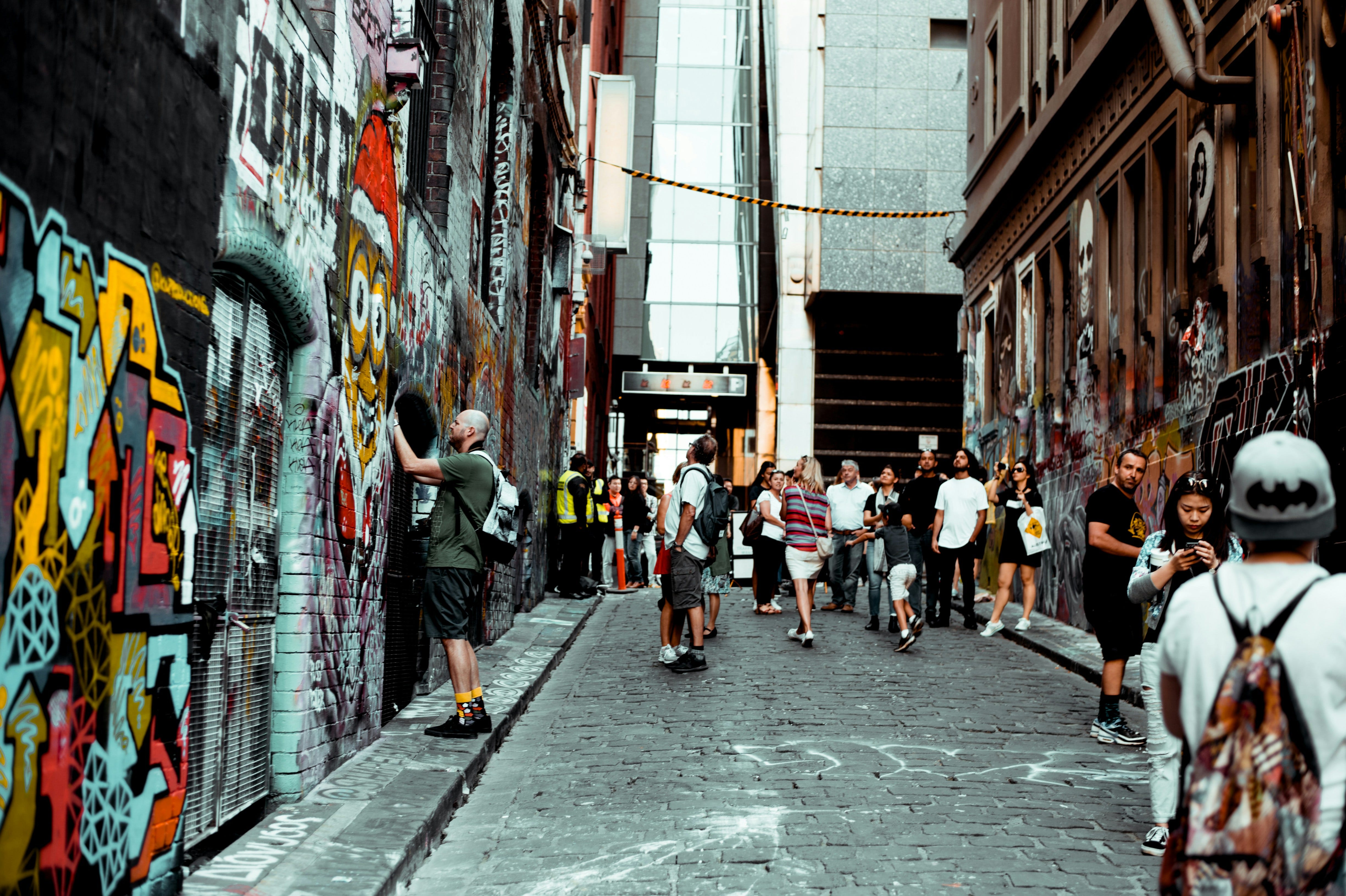
Their verdict: The weather, obviously. People are (mostly) friendly. Dogs in gyms apparently play a part. As I crossed the road, I heard their conclusion: “Maybe it’s too easy.”
That couple didn’t dig below the surface of why “Australia is easy”. Our political process, the sharing of economic benefits, the design of our cities, our famed social tolerance. I hear you say, “But, Andrew, aren’t you following the media? All those things are terrible right now!”
No, they’re not. Really.
The truth is that fewer than one in ten people on Earth live in what the Economist Intelligence Unit calls a full democracy (Surprise finding: the USA isn’t one of them). Nearly four in ten live under authoritarian rule. That couple were comparing two countries inside the world’s most comfortable sliver.
What’s interesting to me is that, inside that sliver, someone has to produce all that ease. All that social and economic (and dog friendly) machinery has been created. By someone. The reliable energy, water, and infrastructure. The fair laws, the accessible services. Yet, up close, that machinery is more fragile than the footpath conversation suggests.
I’m working with two ‘fragile’ organisations right now: one is weighing whether to hand a very large funded program back to government. Another is running a service business, at enormous scale, on no margin.
Note that neither is failing. They’re both delivering excellent services. And they recognise that delivering ‘easy’ is, in fact, very hard. Yet what they’ve done is the first step of saying the unsayable out loud: This isn’t viable (and there’s no buffer).
Getting to easy is nearly always hard work. The organisations that create systems the rest of us experience as effortless are the ones willing to say it’s hard. But then, still make it happen.
Question: What’s the honest sentence your organisation needs said out loud?
De-center the founder
US Presidential libraries are usually mausoleums with gift shops: the great man’s papers, the great man’s desk, the great man’s story.
Last month, the Obamas opened something else entirely on Chicago’s South Side. Their “presidential center” has no archives on its 19-acre site. It has a basketball court. A BBQ. A teaching kitchen. Even a hill for sledding in winter.
The museum doesn’t even begin with Obama. It begins with an exhibit called ‘Founding Contradictions’: the Declaration of Independence displayed beside a Cherokee petition against expansion. Then the movements that made him possible. And at the opening, he told visitors to skip the footage of his speeches and watch the stories of ordinary citizens instead.
Many of my clients, in health, justice, education, aged care, are trying to build exactly this: agency in the people they serve, not gratitude toward the service. The Obamas’ design lesson is that people don’t arrive wanting to be developed, or even informed. They arrive wanting to shoot hoops, or have a BBQ.
The educative part happens as a side glance.
Question: How do you make the people you serve the protagonists in your story, not you?
Everyone does it
A CEO said something to me this week that brought a smile to my face: “This is the first time strategy is fun. Before, I saw it as a chore.”
But here’s who I know reads this newsletter: hospitality managers, winery owners, urban planners, playwrights, retailers. One reader, a web designer, told me the questions I ask here gave him confidence to ask them of his own clients. Asking those questions changed how he saw his work. And, guess what? He now sells himself as a brand strategist.
Toyota figured this out decades ago with the andon cord: any worker on the line, not just managers, could stop production by asking, in effect, “Should we keep going?” Quality became everyone’s job the moment anyone could question it.
Strategy works the same way.
It was never a title, or a process, let alone a chore. It’s anyone’s for the taking. It’s simply a habit of asking the best questions, and being open enough to listen to the answers.
Question: What's one question you could ask this week that you normally wouldn't?
Wander through this coming week noticing the cool things in ‘the commons’ around you that someone has created. The layers of design, financing, coordination, and even regulation.
I’m always in awe of the compendium of human talent in the smallest things, and I’d love you to do the smallest thing of clicking the heart.
After you’ve done that, I’ll say adios and ciao and arrivederci, until next Friday.
Andrew
Your piece on why "Australia is easy" reminds me of Steven Pinker's book "Enlightenment Now" where he argues, with compelling data, that health, prosperity, safety (and other elements of wellbeing, even in Third World countries) are vastly improving due to reason, science and human ingenuity.
Thanks Andrew, I continually tell people we are the luckiest people on earth to live in Australia, and often hear back moaning about the political system, cost of living, etc. love your take on EASE (and all the work behind it) and totally agree.