
The Rules Underneath
Written from above Europe . . .
When we don’t have enough to go around
I’m a bit of a tennis nerd.
But I promise this segment isn’t about tennis. It’s about the politics of scarcity.
At Wimbledon last weekend I saw arguably the greatest of all time, plus both current world number ones. In a single day. And what fascinated me as much as the grit and tears (of joy, and shock) was how Wimbledon decides who gets a seat.
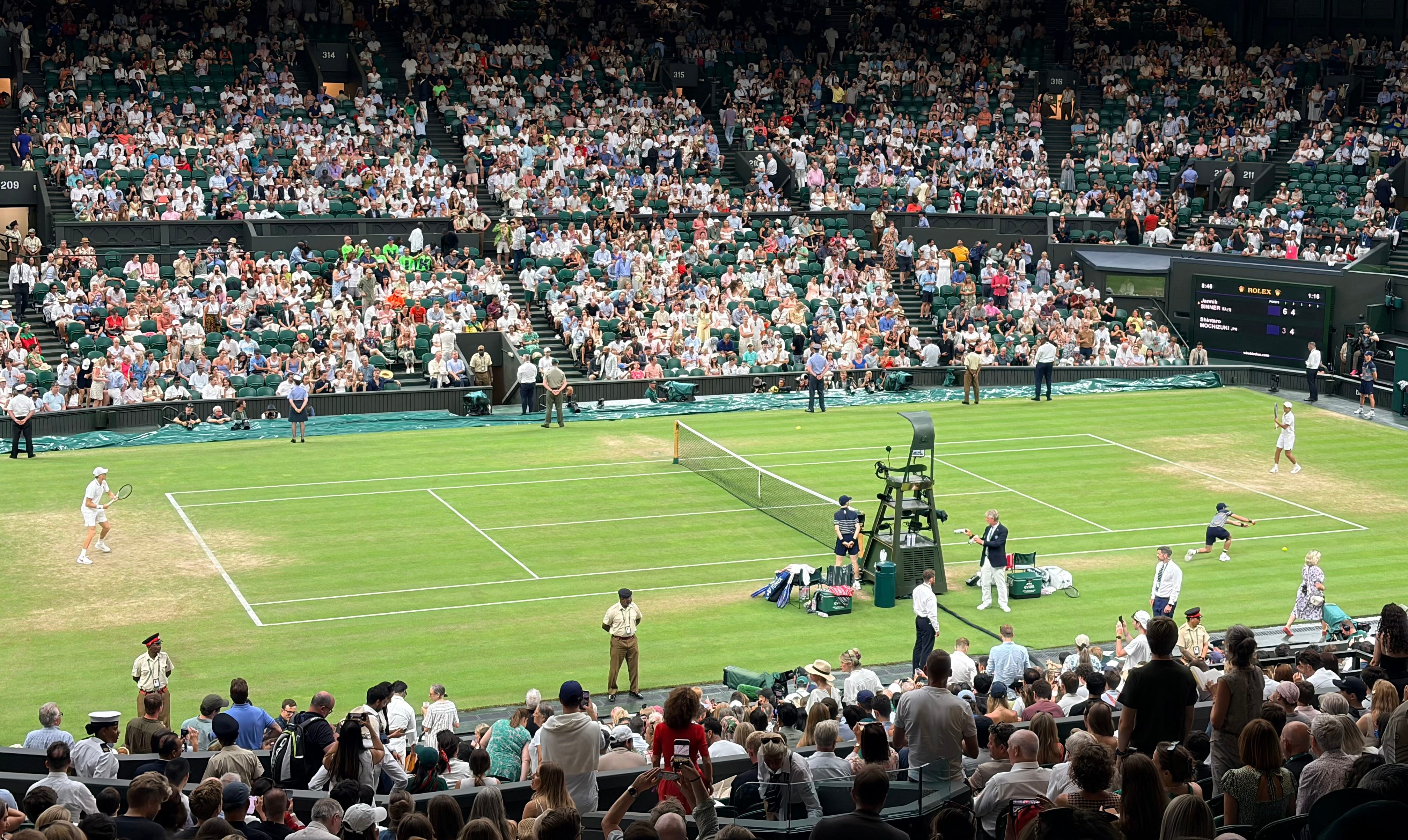
Bluntly, it’s an aristocracy.
An assured seat requires buying a debenture: a five-year investment in the club, held tightly, renewed within families across generations. These traded this year for £380,000. To save you the calculation, that’s £5,428 per day of tennis. That’s what many of those people sitting in the front 15 rows paid.
This system of rationing follows a stratified logic: money at the top (debentures), patience at the bottom (I met people who’d queued for 30 hours for one of 500 ‘unallocated’ centre court tickets) and luck in the middle (that was me: I won the right to buy two tickets — for just £200 each — through a ballot via my Australian tennis club).
Now, each of the four Grand Slams rations by its own politics.
The Australian Open is broadly egalitarian: the taxpayer funds the venue, Tennis Australia sells as many seats as it can (more than twice as many as Wimbledon), and I can buy one the night before. The French Open leans socialist, with surplus mandated to flow back to grassroots tennis. The US Open behaves like pure capitalism: price discrimination, corporate hospitality, revenue above all.
Four tournaments, four national cultures. The same scarce commodity, but four answers to who deserves what.
Question: Which philosophy is built into your distributive rules? And what would change for the people at the bottom of your queue if you shaped it differently?
Working backwards to go forwards
I visited a friend and colleague, Douglas Squirrel, who lives in a tiny thatched cottage in bucolic rural Kent. (It does sound rather Beatrix Potter-like, but let me explain!)
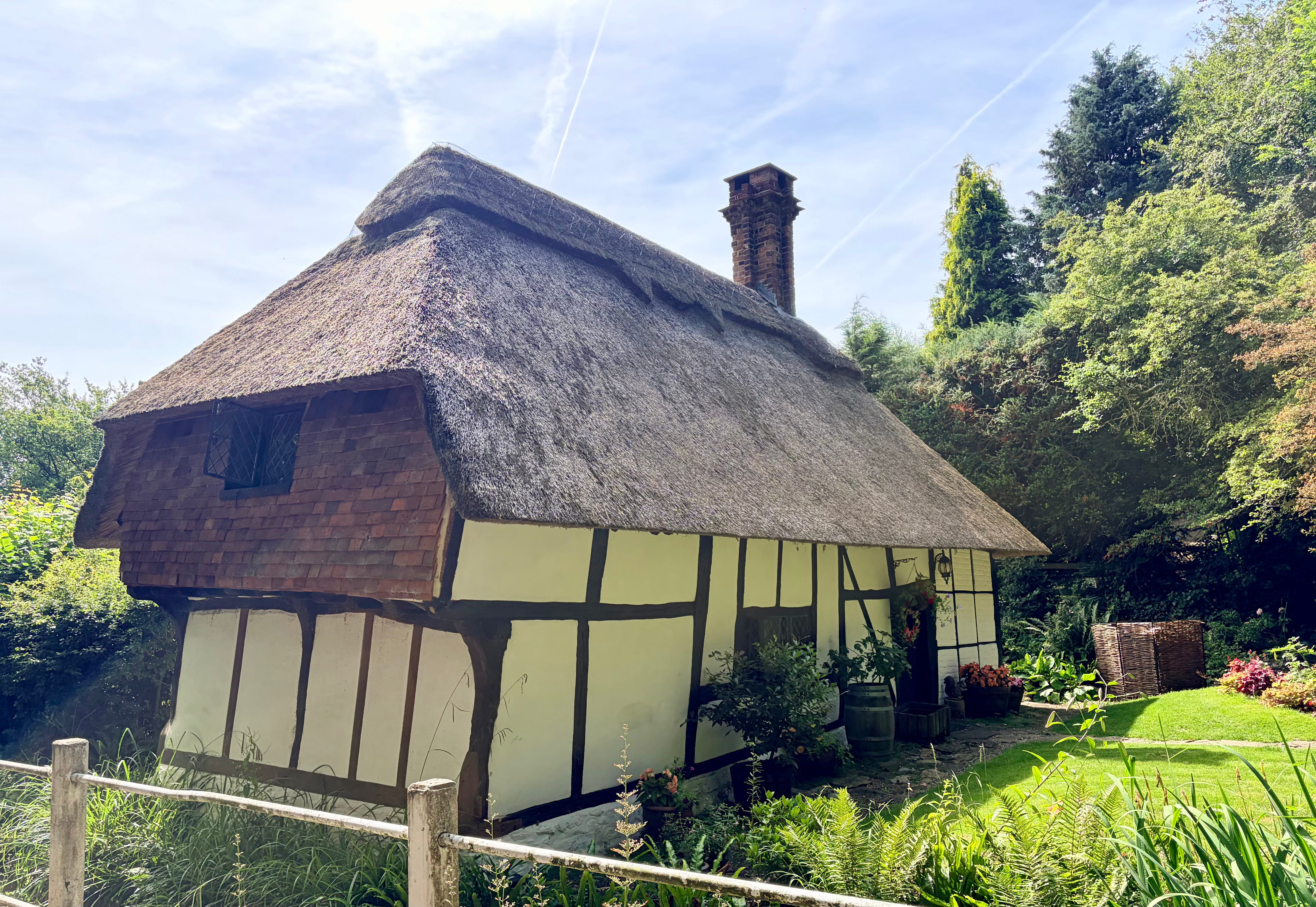
The irony wasn’t lost on me that I had arrived at the station in less than an hour from London on Britain’s fastest domestic train and Squirrel picked me up in his electric Jaguar. But the irony was perfect because as Squirrel was proud to point out, his house was the embodiment of the latest tech.
15th century technology that is.
His cottage has interior stairs. A new feature in domestic buildings then.
As were the curved timbers holding up the roof, called cranked principals.
Successive owners continued innovating over the centuries: a brick chimney arrived in the 16th century to replace the primitive open hearth from where smoke just escaped through the thatch. Then came an 18th century ceiling, a 19th century kitchen, a 20th century bathroom.
Squirrel and his wife Lisa are dedicating themselves to "preservation". Their work is another retrofit, arguably the most radical one yet, because they’re the first owners in 600 years working backwards. What they're really doing is choosing which past counts. The Georgian ceiling they removed was somebody's cherished improvement once; the gleaming copper bathtub they added was something that no 15th century farmer would ever have seen.
Question: When you're protecting what matters in your organisation, whose version of the past have you chosen as the one worth preserving?
Paid to disagree
Under Whitehall, in the Churchill War Rooms, there’s a small room where the most important technology of the war was a coloured pencil.
The Map Room ran day and night for the entirety of WW2. Officers and clerks tracked everything by hand: pins for convoys, flags for armies, tabulated charts of casualties.
Every morning before 9am, a situation report went to the King, the Prime Minister and the Chiefs of Staff.
Every morning. For six years.
In July 1944, with V-1 flying bombs killing Londoners daily, Churchill asked his Chiefs to consider retaliatory raids on Germany. The minutes of the meeting survive. And the War Rooms recreate the tense 10 minute exchange.
The debate wasn't about whether revenge was right. The Chiefs argued about whether the evidence said it would work. It didn’t, and they told him so. Churchill’s advisers were prized not for agreeing with him, but for holding a defensible position under pressure from the most formidable wordsmith and arguer in Britain.
And this was Churchill’s genius. He understood the power of the coloured pencils, and pins and card files. The Map Room and the 9am report were operational well before Churchill even became PM. He didn’t build the cadence and the culture. He inherited it. He submitted to it: the most domineering arguer in Britain accepted a system built to argue back to him.
Question: Who in your organisation is paid to ensure your most senior people hold a defensible position?
I’m writing this on my flight home so by the time you’re reading, I’ll have landed on chilly Melbourne soil. Refreshed, I’m looking forward to the second half of 2026, and I’m excited to be working with some of you reading.
As always, let me know you’re enjoying the ride by clicking the heart, and I’ll be with you again next week.
Andrew
Fascinating story of the allocation of tix for the tennis majors. Glad we live in Aus.
I have watched the person and persons who held the defensible positions in a match committee room in an AFL Club, where who plays in the next game and who doesn't. They are a pain at times, but much needed voices because they bring lateral thinking and cause the rest of the committee to reflect.