
How Big Is Big?
Not As Far As You Might Think
My gym trainer Adam has a habit of running psychological experiments on me.
This week I mentioned a guy I’d seen benching two 30kg dumbbells, easily, and how far off that felt from my usual 15kg a side.
Adam just smiled. “Alright, let’s start with 15.”
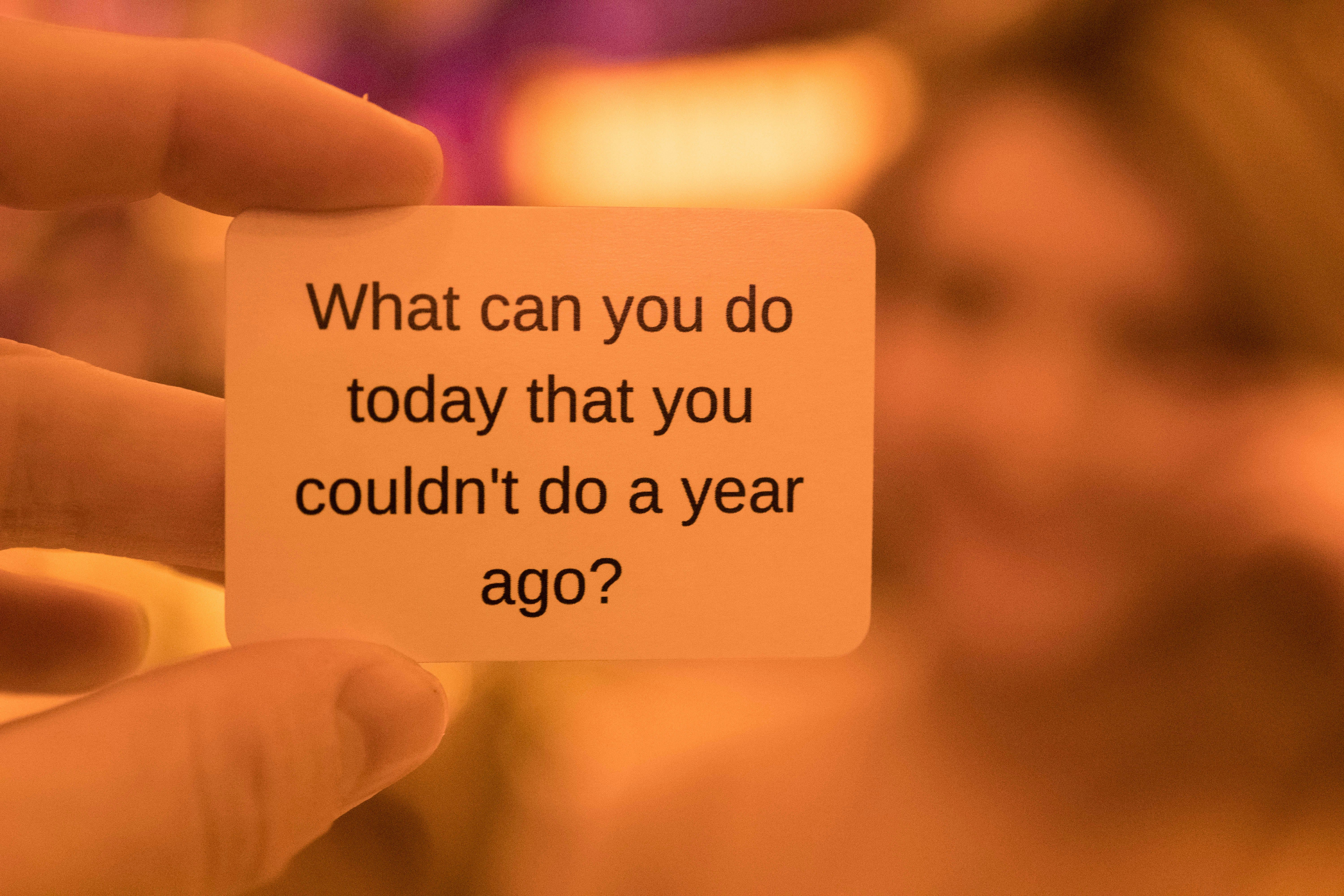
We did. Then 17.5. Then 20. Then 22.5. Four sets, maybe ten minutes. “You see,” he said, “you’re only 7.5kg away from that guy.”
I was impressed.
Not by myself, but by how quickly Adam had closed the gap between who I think I am and who I want to be.
Good strategy facilitation works the same way.
I often start with clients who are convinced that exceptional performance belongs to someone else, some other organisation with better resources, or smarter people. My job isn’t to talk them into bigger ambition, or to write up a “stretch goal” on a whiteboard. It’s showing them that the increments already sit inside their current capability, each one small enough to be undeniable.
In the gym with me, it took Adam ten minutes. With strategy, it’s a few hours for me to get the shift. With my clients, it might be a few months before they see signs of progress.
That’s still a long way away from years. Or never.
Question: What would you attempt now if you knew it was only a few steps away?
When It’s Obvious to Some
In 1954, a French Dominican friar named Yves Congar was banned from teaching.
Rome called him dangerous. His books were pulled from the shelves.
His crime was believing Catholicism didn’t hold a monopoly on truth, and saying so out loud in support of priests who’d gone to work in factories to live alongside ordinary people.
Seven years later he was called back, to the Second Vatican Council, to draft the documents that would remake Catholicism for our world. Congar still had to build alliances, court the powerful, and persuasively (and persistently) argue against reactionaries to get his points into doctrine. And he didn’t win all his battles. Just the biggest ones.
Real modernisation is often just like this.
At first, only a few can see what’s needed, and they’re often marginalised. Every paradigm shift in history (printing, heliocentricity, germ theory) had opponents set upon destroying them. Today, these and more are givens, and nobody even remembers who opposed them.
I’m seeing it in my own work in three rather obvious settings. The best universities are working out what knowledge production means when a machine can draft a thesis overnight. The best aged care providers are challenging what passes for dignified care today. And, renewable energy will be as obvious to our grandchildren as coal once was to us, the way Latin Mass with a priest’s back turned once was the ‘true’ way.
Modernising rarely looks like a triumphant unveiling. Instead, like Congar hustling in the corridors of the Vatican, it looks like years of unpopular, unglamorous persistence.
Question: What modernising are you backing before it’s obvious to others that it’s right?
Ten Out of One Hundred
A client sat across from me, her coffee totally ignored. She was animated, ecstatic even.
She said, “Andrew, honestly, I think this is it.”
We’d only half-developed her strategy and, already, she’d sniffed out an opportunity to merge with an organisation that owned something she couldn’t buy or build for any money: a live research and data-collection capability, built over a decade, that proves what actually works in her sector.
With this merger, her fifty-year old organisation would stop just being another (albeit leading) provider and morph into a body that sets the evidence base everyone else gets measured against.
“This move will define us for the next fifty years,” she said.
Now, I’ve heard versions of her sentence maybe a hundred times in a quarter of a century of strategic advising.
About ten turned out to be true.
Derek Parfit called these moments "hinges of history." These are the rare points where we hold enough power to swing the future wide open, or swing it shut for good (at our peril). Kodak's engineers unknowingly stood at the existential door of digital photography, and let it swing shut on them. Netflix stood at the same kind of hinge with video streaming, and pushed it wide open. There are those who see AI as a hinge, on the cusp of swinging open or shut on the very fabric of capitalism.
My job at a hinge isn't to question it. And it's not to dilute the enthusiasm. It's to help my clients see clearly enough to act like the door swinging open actually matters, because sometimes it genuinely does.
Question: Which decision within sight is a hinge into your future?
This week examine the difference between far-reaching and over-reaching.
And, it’s never an over-reach to click the heart. I love knowing you’re reading.
See you next week,
Andrew
“What can you do today that you couldn’t do a year ago?” Unabashed Brag Alert: In the spirit of your experience with Adam, a couple of years ago, I started practicing handstands. My thinking was that I’d probably never be able to do a free-standing handstand but the practice to get there would be so good for body strength. In my seventh decade, and with the support of a narrow hallway and the wonderful Katie O’Keeffe, I recently managed a second or two on my own. Thanks to another extraordinary woman – Alessandra Argese – I am also running faster, stronger and longer than I did when she got me started in my 50s. Developmentally, this could not have happened without the kind of scaffolding and brilliance provided by those who are so skilled as to be masterful – much the same as you are Andrew when it comes to strategy – where you help your clients see that exceptional performance may only be a few increments away.